Nutritive Value of Flour: A Simple and Complete Guide
Nutritive Value of Flour Flour is something we use almost every day, but most people do not think about what nutrients it gives to the body. Whether you make chapati, roti, bread, paratha, biscuits, cake, pancakes, or snacks, flour is always an important ingredient. Because we eat it so often, it is important to understand its nutritive value, meaning what vitamins, minerals, and other nutrients it contains. In this simple and easy guide, we will explain everything in clear words so you can choose the best flour for your health.
What Is Flour?
Flour is a soft powder made by grinding grains like wheat, rice, oats, corn, or even nuts like almonds. The most common flour people use is wheat flour, but today many other types are also available in the market. Each type of flour has a different taste, texture, color, and nutrient level. Some flours are whole grain, which means they include all parts of the grain and give more nutrients. Other flours are refined, which means they remove some parts of the grain and therefore have fewer nutrients. Knowing this difference helps you make better food choices.
Why Nutritive Value of Flour Is Important
Flour is a big source of energy for many people because we eat it daily. If the flour you use has good nutrients like vitamins, minerals, and fiber, it supports your health, digestion, energy, and weight control. But if you eat flour that has fewer nutrients, like maida, it gives you quick energy but does not help your body in the long run. The type of flour you choose can affect your blood sugar, hunger levels, stomach health, heart health, and even your weight. That is why understanding flour nutrition is very important.
Main Nutrients Found in Flour
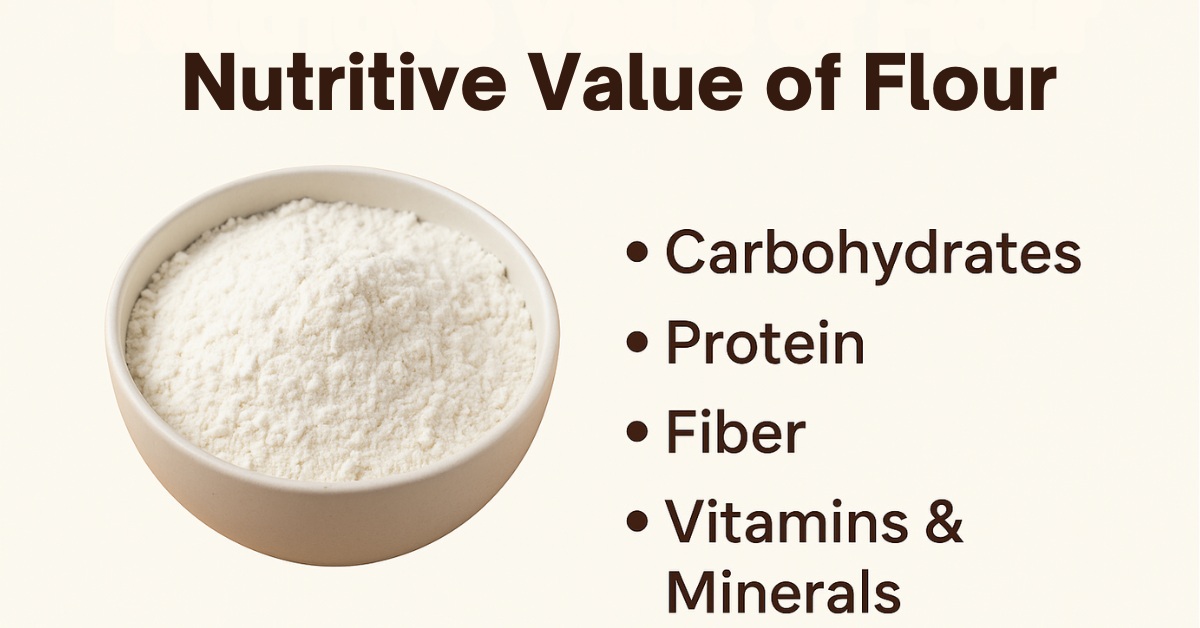
1. Carbohydrates
Flour contains carbohydrates, which give energy to your body. Your brain and muscles need carbs to work properly. Whole grain flours have complex carbs that digest slowly and keep you full longer. Refined flours have simple carbs that digest quickly and can make you hungry again soon.
2. Protein
Flour also has some protein. Wheat flour contains a special protein called gluten, which makes dough soft and stretchy. Protein helps your muscles grow, repairs tissues, and keeps your body strong.
3. Fiber
Whole grain flours have a good amount of fiber. Fiber helps your stomach work smoothly, prevents constipation, and keeps you full for more time. Fiber also helps control blood sugar levels, which is very helpful for people with diabetes.
4. Vitamins
Flour has vitamins like B1, B2, B3, and B9. These vitamins help your body make energy, improve brain function, and support healthy blood cells. Whole grain flours have more vitamins, while refined flours have less.
5. Minerals
Flour also contains minerals such as iron, magnesium, zinc, and selenium. These minerals help your bones, blood, muscles, and immune system stay healthy.
Nutritive Value of Whole Wheat Flour
Whole wheat flour is one of the best types of flour for health. It contains all three parts of the grain:
- Bran – the fiber-rich outer layer
- Germ – the vitamin- and mineral-rich part
- Endosperm – the inside part with energy
Because whole wheat flour keeps all these parts, it contains more fiber, vitamins, and minerals. It gives slow and steady energy, keeps you full longer, and helps control blood sugar. It also supports good digestion because of the high fiber. Whole wheat flour is good for chapati, bread, and many other healthy foods.
Nutritive Value of Maida (Refined Flour) – Simple Version
Maida is made from wheat but is highly refined. The bran and germ are removed, and only the inside (endosperm) is used. This makes maida very soft but also low in nutrients. Maida contains mostly simple carbs that digest fast and can raise blood sugar quickly. It has almost no fiber, so it can cause bloating or constipation. Maida is good for cakes, pastries, pizza, and bakery items, but it should not be eaten every day because it does not give many nutrients.
Nutritive Value of Multigrain Flour
Multigrain flour is made by mixing grains like wheat, oats, barley, millet, and corn. Because it has many grains, it gives more nutrients compared to single-grain flour. Multigrain flour contains a good mix of fiber, protein, vitamins, and minerals. It keeps you full for longer, gives stable energy, and improves digestion. Many people choose multigrain flour because it is healthier and more balanced.
Nutritive Value of Rice Flour
Rice flour is naturally gluten-free, so it is good for people who cannot eat gluten. It is light on the stomach and easy to digest. White rice flour has fewer nutrients and less fiber, but brown rice flour has more fiber and more minerals. Rice flour is often used in snacks, dosa, roti, and as a thickener for soups.
Nutritive Value of Oat Flour
Oat flour is one of the healthiest flours because it has a special type of fiber called beta-glucan. This fiber is very good for digestion, lowering cholesterol, and controlling hunger. Oat flour gives slow-releasing energy, which keeps your blood sugar stable. It is also naturally gluten-free and rich in minerals. Oat flour is very helpful for weight loss and better digestion.
Nutritive Value of Almond Flour
Almond flour is made from ground almonds. It is very nutritious and contains healthy fats, protein, fiber, and vitamin E. Almond flour is low in carbs, so it is great for people on keto or low-carb diets. It keeps you full longer and supports heart health because of the healthy fats. Almond flour is also good for skin and brain health. It is commonly used in healthy baking.
Which Flour Is the Healthiest?
The best flour depends on your goal:
- For everyday health: Whole wheat or multigrain flour
- For weight loss: Oat flour or multigrain flour
- For gluten-free diets: Rice flour or almond flour
- For keto or low-carb: Almond flour
- For digestion: Oat flour or whole wheat flour
Choosing the right flour can help you stay healthy and active.
Conclusion
Understanding the nutritive value of flour helps you make better food choices. Whole grain flours like whole wheat, oat, and multigrain give more nutrients, more fiber, and better health benefits. Refined flours like maida should be eaten only sometimes because they do not offer many vitamins or minerals. If you choose flour wisely, you can improve your energy, digestion, weight control, and overall health.