Hamstring Exercises: for Strength, Flexibility, and Injury Prevention
Hamstring exercises are an important part of any fitness routine, whether you are a beginner or an experienced athlete. Many people focus only on visible muscles like the chest, arms, or abs, but the hamstrings—located at the back of your thighs—play a key role in daily movement and overall strength. Weak or tight hamstrings can lead to poor posture, lower back pain, and even injuries during sports or simple activities like walking or climbing stairs.
In this article, we will explain what hamstring exercises are, why they are important, and how you can include them in your workout routine. The goal is to help you understand these exercises in simple language so you can practice them safely and effectively.
What is Hamstring Exercises?
Hamstring exercises are physical movements designed to strengthen and stretch the group of three muscles located at the back of your thigh. These muscles are called the biceps femoris, semitendinosus, and semimembranosus. Together, they help you bend your knees and move your hips.
When you walk, run, jump, or even stand up from a sitting position, your hamstrings are actively working. If these muscles are weak or tight, your body cannot move properly, and this may increase the risk of injuries.
Hamstring exercises can be divided into two main categories: strengthening exercises and stretching exercises. Strengthening exercises build muscle power and stability, while stretching exercises improve flexibility and reduce stiffness. Both types are equally important for maintaining healthy legs and overall body balance.
These exercises can be done at home, in the gym, or even outdoors. They do not always require special equipment, which makes them easy for anyone to include in their daily routine.
Benefits of Hamstring Exercises
Hamstring exercises offer many benefits that go beyond just improving leg strength. One of the main advantages is better muscle balance. When your hamstrings are strong, they work together with your quadriceps (front thigh muscles), which helps keep your knees stable and reduces the chance of injury.
Another important benefit is improved posture. Tight hamstrings can pull your pelvis backward, leading to poor posture and lower back pain. By stretching and strengthening these muscles, you can maintain a more natural and comfortable body position.
Hamstring exercises also enhance athletic performance. Whether you are running, playing football, or doing any physical activity, strong hamstrings help you move faster and more efficiently. They provide power for explosive movements like jumping and sprinting.
In addition, these exercises can help prevent injuries. Many common injuries, such as muscle strains, occur due to weak or tight hamstrings. Regular training keeps the muscles flexible and strong, reducing the risk of sudden tears or pain.
Lastly, hamstring exercises support joint health. They help stabilize the knee and hip joints, making everyday movements smoother and safer.
Types of Hamstring Exercises
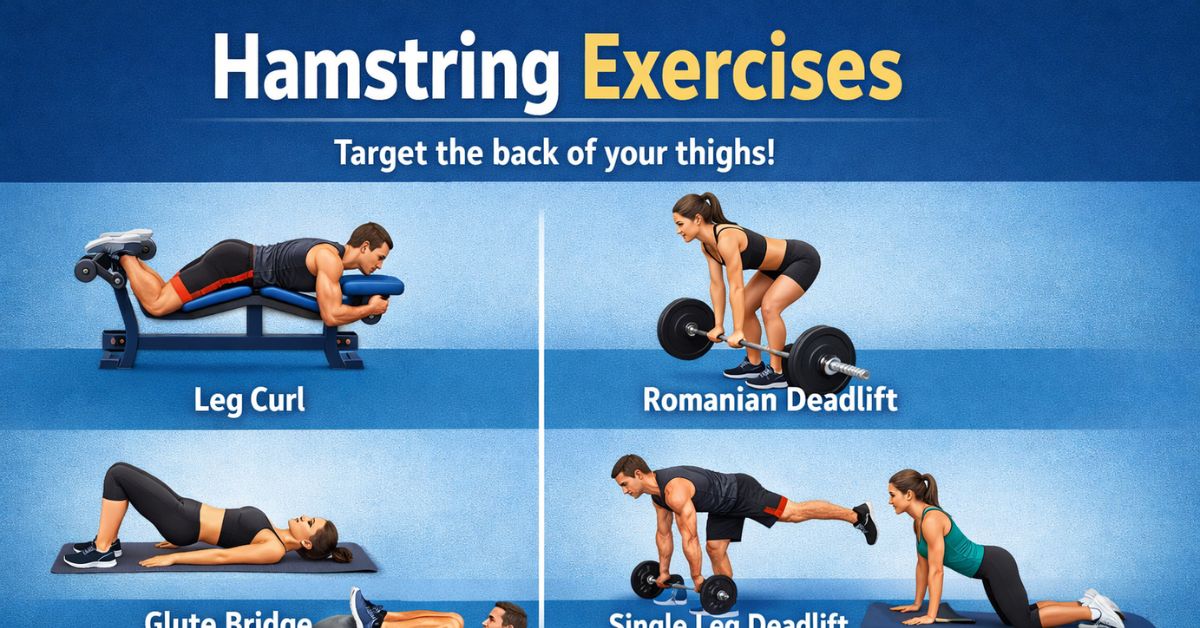
There are many types of hamstring exercises, and each one targets the muscles in a slightly different way. Here are some of the most effective and commonly used exercises:
1. Leg Curls
Leg curls are one of the most popular hamstring exercises. They can be done using a machine at the gym or with resistance bands at home. In this exercise, you bend your knees and bring your heels toward your hips. This movement directly targets the hamstring muscles and helps build strength.
2. Romanian Deadlifts
This exercise is great for both strength and flexibility. You hold a weight (like dumbbells or a barbell) and bend forward at your hips while keeping your back straight. As you lower the weight, you will feel a stretch in your hamstrings. Then, you return to the standing position.
3. Glute Bridges
Glute bridges mainly target the glutes but also engage the hamstrings. You lie on your back with your knees bent and lift your hips upward. This exercise helps improve lower body strength and stability.
4. Hamstring Stretch
Stretching is just as important as strengthening. A simple hamstring stretch involves sitting on the floor with one leg extended and reaching toward your toes. This helps improve flexibility and reduces muscle tightness.
5. Nordic Hamstring Curls
This is a more advanced exercise that focuses on building strong hamstrings. You kneel on the ground while someone holds your ankles, and you slowly lower your upper body forward. This exercise is very effective but should be done carefully.
6. Kettlebell Swings
This dynamic exercise combines strength and cardio. You swing a kettlebell between your legs and then forward using the power of your hips. It engages the hamstrings and improves endurance.
How to Use Hamstring Exercises
To get the best results, it is important to use hamstring exercises correctly. Start by choosing exercises that match your fitness level. Beginners should focus on simple movements like glute bridges and basic stretches, while advanced individuals can include exercises like Romanian deadlifts and Nordic curls.
You should include hamstring exercises in your workout routine at least two to three times per week. This allows enough time for the muscles to recover and grow stronger. Each session can include 3 to 5 different exercises, with 2 to 3 sets of each.
It is also important to maintain proper form. Incorrect posture can reduce the effectiveness of the exercise and increase the risk of injury. For example, when doing deadlifts, always keep your back straight and avoid rounding your shoulders.
Warm-up is another key step. Before starting your workout, spend 5–10 minutes doing light cardio or dynamic stretches. This prepares your muscles and reduces the chance of strain. After your workout, include static stretches to relax the muscles.
Tips for Best Results
To achieve the best results from hamstring exercises, consistency is very important. Doing these exercises regularly will help you see improvements in strength and flexibility over time. Skipping workouts or being inconsistent can slow your progress.
Focus on quality over quantity. It is better to perform fewer repetitions with proper form than to do many repetitions incorrectly. Always listen to your body and avoid pushing yourself too hard, especially if you are a beginner.
Gradually increase the intensity of your workouts. As your strength improves, you can add more weight, increase repetitions, or try more advanced exercises. This helps keep your muscles challenged and promotes continuous growth.
Stay hydrated and maintain a balanced diet. Proper nutrition supports muscle recovery and overall health. Protein, in particular, is important for muscle repair and growth.
Lastly, do not ignore rest and recovery. Your muscles need time to heal after workouts. Make sure to get enough sleep and allow at least one day of rest between intense sessions.
Conclusion
Hamstring exercises are essential for building strong, flexible, and healthy legs. They support daily movements, improve posture, and reduce the risk of injuries. By including both strengthening and stretching exercises in your routine, you can achieve better balance and overall fitness.
Whether you are working out at home or in the gym, hamstring exercises are simple to perform and highly effective. With proper technique, consistency, and care, you can enjoy long-term benefits and improved physical performance. Start with basic exercises and gradually progress as your strength increases. Your body will thank you for it.