What Size Weighted Vest Should I Get? — Simple and Easy Guide for Beginners
Choosing the right weighted vest is very important because it decides how safe and effective your workouts will be. If the vest is too heavy, you may hurt your joints or lose your balance. If the vest is too light, you may not get the results you want. Many people feel confused and ask the same question: “What size weighted vest should I get?” In this simple guide, I will explain everything in easy words so you can choose the right vest for your body and your goals.
1. Know Your Fitness Level and What You Want to Achieve
Before you buy a weighted vest, first think about your fitness level. If you are a beginner, it is always better to start with a light vest so your body can adjust slowly. A safe starting point is 5–10% of your body weight. For example, if you weigh 70 kg, a 3.5–7 kg vest is perfect for starting out. This weight will increase your workout challenge but will not put too much pressure on your knees, back, or shoulders.
If you already exercise often or lift weights, you can choose a slightly heavier vest, usually 10–15% of your body weight. This will help you build more strength. Advanced athletes sometimes use 15–25%, but this is only for people who already have strong bodies and good form. Remember: if you are not sure, always choose the lighter option first.
2. Choose the Weight Based on the Activity You Will Do
The right vest size also depends on the type of exercise you plan to do. Different exercises need different weights. Here is a simple explanation:
- Walking or Hiking: Best weight is 5–10% of your body weight. This adds extra challenge but stays safe for long walks.
- Running: Use very light weight, around 2–5%. Too much weight can hurt your knees and change your running form.
- Push-ups, Pull-ups, Squats: You can use 5–15% because these exercises are strength-based.
- Jumping or Plyometrics: Always use very light weight (5% or less) because heavy vests can make landings unsafe.
- Military or Tactical Training: Heavier weights can be used, but only with slow progression and proper form.
So the answer to what size weighted vest should I get depends a lot on how you will use it.
3. Make Sure the Vest Fits Your Body Comfortably
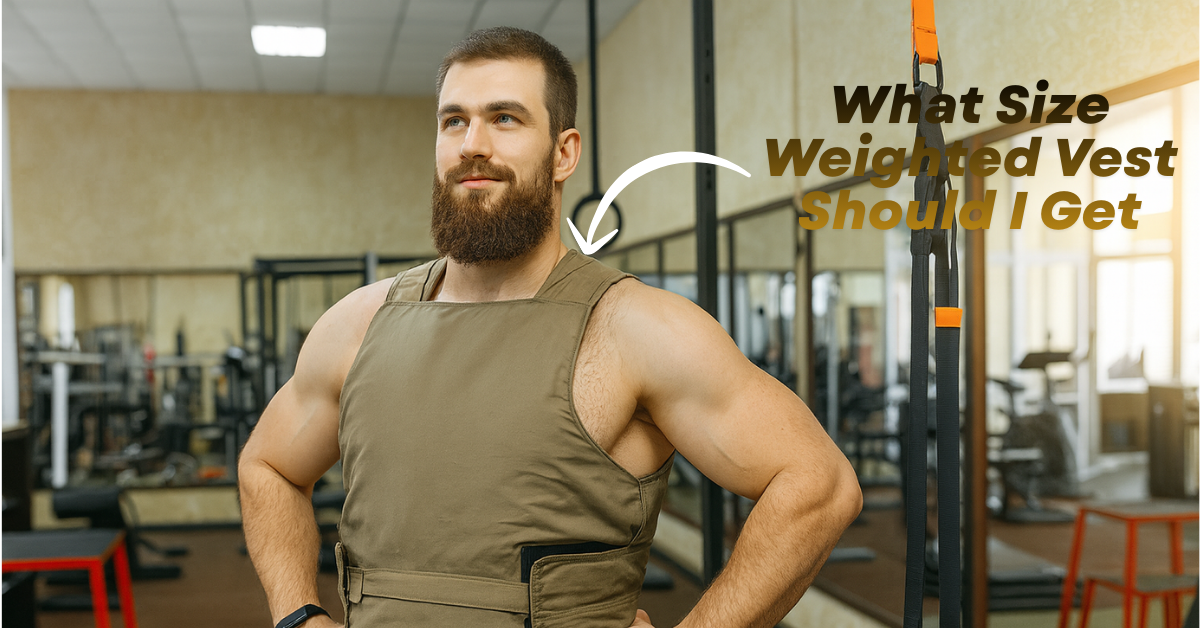
Weight is not the only thing that matters. A vest must also fit your body properly. If the vest is too loose, it will bounce, slide, and rub against your skin. This can cause pain and make your workout uncomfortable. Look for vests that have adjustable straps so you can tighten the vest around your chest.
It is also best to buy a vest with removable weight pockets. This allows you to start light and slowly increase weight as you get stronger. A good weighted vest should also distribute weight evenly on the front and back. This balance helps protect your back and keeps your posture straight.
4. Increase Weight Slowly and Safely (Simple Plan)
Here is an easy and safe plan for increasing vest weight:
- Weeks 1–2: Use only 5% of your body weight. This helps your body get used to the extra load.
- Weeks 3–6: If everything feels normal, add a little more weight (2–5%). Make sure you keep good form.
- After 6 weeks: You can slowly move to 10–15% of your body weight for strength exercises.
- Always check your form: If your form becomes bad or you feel pain, reduce the weight immediately.
Slow progress is the safest and best way to build strength with a weighted vest.
5. Easy Weight Guide Based on Your Body Weight
Here is a very simple chart that shows the best vest size for your weight:
- Under 120 lb (55 kg):
Start with 3–6 lb for walking.
Use 6–12 lb for strength training. - 120–160 lb (55–73 kg):
Start with 6–12 lb.
Progress to 12–24 lb with experience. - 160–200 lb (73–91 kg):
Start with 8–16 lb.
Advanced: 16–32 lb. - 200+ lb (91+ kg):
Start with 10–20 lb.
Only increase if form stays perfect.
This chart gives you a clear idea of what size weighted vest you should get based on your weight.
6. Pick Good Material and Build Quality
Weighted vests come in two main types: fixed-weight and adjustable-weight. Fixed vests cannot change weight, so they are simple but not good for long-term progress. Adjustable vests are better because you can remove or add weight whenever you want.
Choose a vest made with strong, breathable materials. Look for thick padding on the shoulders so the vest does not feel painful during long workouts. Spending a bit more money on a good vest is worth it because it lasts longer and feels much more comfortable.
7. Avoid These Common Mistakes
Many people make mistakes when buying a weighted vest:
- They choose a vest that is too heavy.
- They use the same weight for all exercises, even when different workouts need different loads.
- They ignore the fit and buy a vest that moves or bounces.
- They increase weight too fast, which can cause injuries.
Avoiding these mistakes will help you choose the perfect vest safely.
8. Simple Checklist Before Buying
Here is a quick list to help you decide:
- What exercises will I do with the vest?
- Am I a beginner, intermediate, or advanced?
- Do I want removable weights? (Recommended)
- Does the vest fit my body tightly and comfortably?
- Is it made of strong material?
- Does the weight match my body weight and fitness level?
If you answer these questions, you will easily know the right vest size for you.
9. Simple FAQ
Q: I am a beginner. What weighted vest should I get?
A: Start with 5–10% of your body weight, or use an adjustable vest and keep it light at first.
Q: Can I run with a weighted vest?
A: Yes, but only with very light weight (2–5%). Heavy vests can hurt your joints.
Q: How often can I increase the weight?
A: Every 2–4 weeks, but only if your form stays good and you feel no pain.
Final Thoughts
The best weighted vest size depends on your activity, your experience, and your body weight. If you are not sure, always choose a lighter vest and slowly increase as you get stronger. A comfortable, adjustable vest is the safest and most effective choice for beginners. With the right vest, you will improve your strength, burn more calories, and get better workout results.