Creatine Pills vs Powder: Which One Is Better for Muscle Growth?
When it comes to improving strength, muscle growth, workout performance, and recovery, creatine is one of the most popular supplements used by athletes and fitness enthusiasts. Creatine is available in several forms, but two of the most common options are creatine pills vs powder. Both products can provide creatine to the body, but they differ in convenience, serving size, price, and how easy they are to use.
Choosing between creatine pills and powder can be confusing, especially for beginners. Some people prefer pills because they are easy to carry and do not require mixing. Others choose powder because it is usually more affordable and allows users to measure their desired amount more easily. The important thing to understand is that the actual benefits of creatine depend more on getting an appropriate daily amount consistently than on whether it comes in pill or powder form.
In this guide, we will compare creatine pills vs powder in simple terms. You will learn what each option is, their benefits, differences, types, how to use them, and practical tips for getting the best results from creatine supplementation.
What Is Creatine Pills vs Powder?
The phrase creatine pills vs powder refers to two different forms of creatine supplements. Creatine pills or capsules contain creatine in a solid form, while creatine powder is a loose powder that is usually mixed with water, juice, a shake, or another beverage. Both are designed to deliver creatine to the body.
Creatine is a naturally occurring compound that is found in the body and in foods such as meat and fish. Your body also produces creatine naturally. It is stored mainly in your muscles and helps support the production of energy during short, intense activities such as weightlifting, sprinting, and other high-intensity exercises.
Creatine monohydrate is the most widely studied form of creatine and is commonly available in both powder and capsule products. Therefore, when comparing creatine pills vs powder, it is useful to check the actual type and amount of creatine rather than focusing only on the form of the supplement.
Creatine powder is generally mixed with liquid before consumption. Creatine pills, on the other hand, can be swallowed with water without needing to prepare a drink. The main difference is therefore convenience and delivery format rather than the basic purpose of creatine.
Benefits of Creatine Pills vs Powder
Both creatine pills and powder can offer similar benefits when they provide the same form and appropriate amount of creatine. Creatine supplementation can increase muscle creatine stores, which may help support performance during repeated high-intensity exercise.
One of the main reasons people use creatine is to support strength and exercise performance. Higher muscle creatine stores can help the body produce energy during short periods of intense activity. This can be useful for activities such as resistance training, sprinting, and high-intensity workouts. Over time, better training performance may contribute to improvements in strength and muscle development.
Creatine is also commonly used to support muscle growth. It does not build muscle by itself, but it can help support training performance and may increase water stored inside muscle cells. When combined with a suitable resistance-training program and adequate nutrition, creatine can be a useful part of a muscle-building plan.
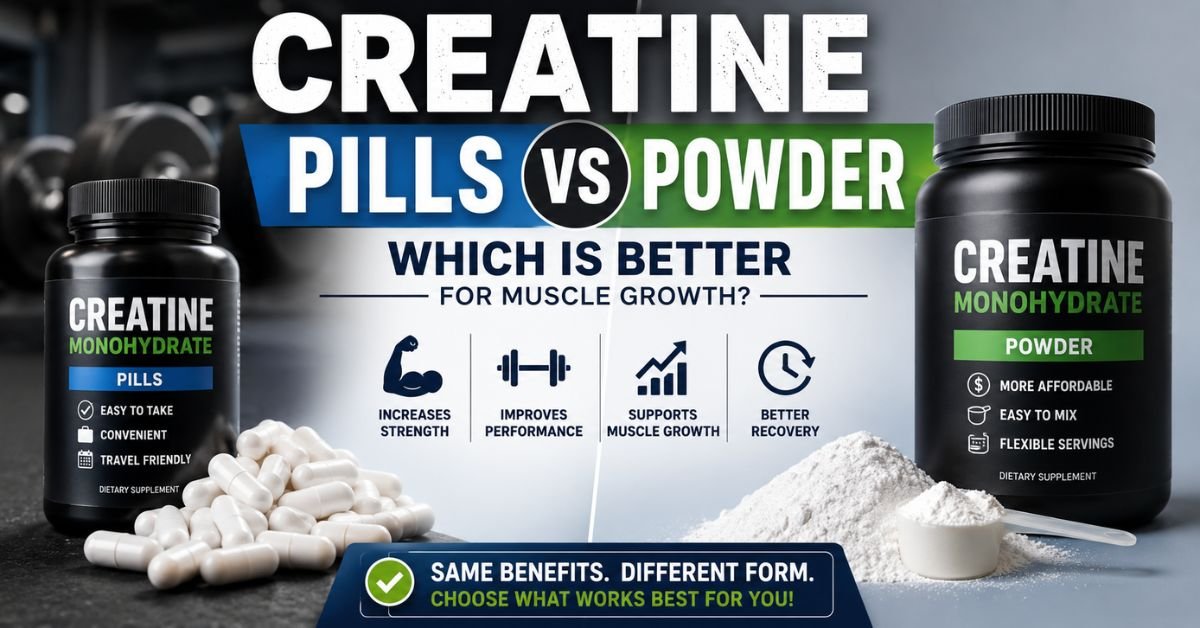
Another advantage is convenience. Creatine pills are particularly useful for people who travel frequently, work long hours, or do not want to mix powder into a drink. You can simply take the recommended serving with water. Creatine powder may be more convenient for people who already prepare protein shakes or pre-workout drinks.
There can also be a cost difference. Creatine powder is often less expensive per serving, although prices vary by brand and product quality. Pills may cost more because they require additional manufacturing and packaging. If you use creatine regularly, comparing the price per gram can help you find the better value.
Types of Creatine Pills vs Powder
The most important factor when choosing a creatine supplement is the type of creatine it contains. Creatine monohydrate is the most common choice and has been extensively studied for exercise performance and muscle-related benefits. It is available in both powder and pill forms.
Creatine powder is available in different variations. Some products contain plain creatine monohydrate, while others include flavoring or additional ingredients. Unflavored powder can be mixed with water, juice, smoothies, or protein shakes. Flavored products can make supplementation easier for people who do not enjoy the taste or texture of plain powder.
Creatine pills may come as capsules or tablets. The exact amount of creatine per pill can vary considerably between products. This means you may need several pills to reach the amount provided by a typical powder serving. Always check the supplement label instead of assuming that one pill equals one full serving.
Some products also combine creatine with other ingredients such as amino acids, carbohydrates, or performance supplements. These combination products are not necessarily better than simple creatine. If your main goal is creatine supplementation, a straightforward product can make it easier to know exactly how much creatine you are taking.
How to Use Creatine Pills vs Powder
For many adults who choose to supplement with creatine, a commonly used maintenance amount is around 3–5 grams of creatine per day. The exact amount can depend on the individual and the product, so it is important to follow the product label and, when appropriate, seek advice from a healthcare professional.
Creatine powder can be mixed with water or another drink. It can also be added to a protein shake or smoothie. It does not have to be taken immediately before a workout to be useful. Consistent daily use is generally more important than choosing a specific workout-time window.
Creatine pills should be taken according to the serving instructions on the product. Because capsules and tablets can contain different amounts of creatine, check the label carefully to determine how many pills provide the intended serving.
Some people use a creatine loading phase, which involves taking a larger amount for several days before moving to a lower maintenance amount. However, loading is not essential. Taking a regular daily amount can also increase muscle creatine stores over time.
It is also important to maintain normal hydration. Creatine increases water storage in muscle tissue, so drinking enough fluids throughout the day is a sensible part of a healthy training routine.
Tips for Best Results
The most important tip when using creatine is consistency. Taking creatine regularly is generally more useful than worrying about the exact time of day. Choose a routine that is easy for you to follow, such as taking it with breakfast or after your workout.
When comparing creatine pills vs powder, consider your lifestyle. Pills may be a better choice if you want maximum portability and do not like mixing supplements. Powder may be better if you want a lower cost per serving, flexible serving sizes, or an easy addition to your shake.
Always read the supplement label carefully. Check the type of creatine, serving size, amount of creatine per serving, additional ingredients, and expiration date. Choosing a reputable manufacturer can also help you avoid products with unnecessary or unclear ingredients.
Remember that creatine works best as part of a complete fitness plan. Resistance training, adequate protein and overall nutrition, sufficient sleep, hydration, and progressive training are all important for muscle growth and performance. Creatine should complement these habits rather than replace them.
Some people may experience a temporary increase in body weight after starting creatine because of increased water stored in the muscles. This is different from gaining body fat. If you have kidney disease, are pregnant or breastfeeding, take medications, or have another medical condition, speak with a healthcare professional before using creatine supplements.
Conclusion
The comparison of creatine pills vs powder does not have one universal winner. Both forms can be effective when they provide an appropriate amount of a well-supported form of creatine. The biggest differences are convenience, price, serving size, and personal preference.
Creatine pills are convenient, portable, and require no mixing, making them useful for people with busy lifestyles. Creatine powder is often more economical and provides greater flexibility when measuring or adding creatine to drinks and shakes. For many users, creatine monohydrate is a practical choice regardless of whether it comes in pill or powder form.
Ultimately, the best option is the one you can use consistently and correctly. Focus on the amount of creatine provided, product quality, your budget, and your personal preferences. Combined with regular strength training, good nutrition, proper hydration, and enough rest, creatine can be a useful addition to a fitness routine.