Sticky Stool: Causes, Types, Treatment, and Tips for Healthy Digestion
Sticky stool can be an unusual and sometimes uncomfortable change in bowel movements. You may notice that your stool feels greasy or sticky, is difficult to flush, or leaves a residue on the toilet bowl. In some cases, sticky stool happens after eating a meal that is very high in fat and goes away within a short time. However, repeated changes in stool texture can sometimes be linked to digestive problems that need attention.
The appearance and consistency of stool can change because of diet, hydration, bowel habits, medications, and digestive conditions. Sticky stool may sometimes be related to excess mucus, constipation, food intolerance, or a high-fat diet. In other situations, greasy or oily stool can be a sign that the body is not properly digesting or absorbing fat.
Understanding the possible causes of sticky stool can help you recognize when a simple lifestyle change may be enough and when it is better to speak with a healthcare professional. This article explains what sticky stool means, its common types, possible causes, practical steps that may help, and warning signs that should not be ignored.
What Is Sticky Stool?
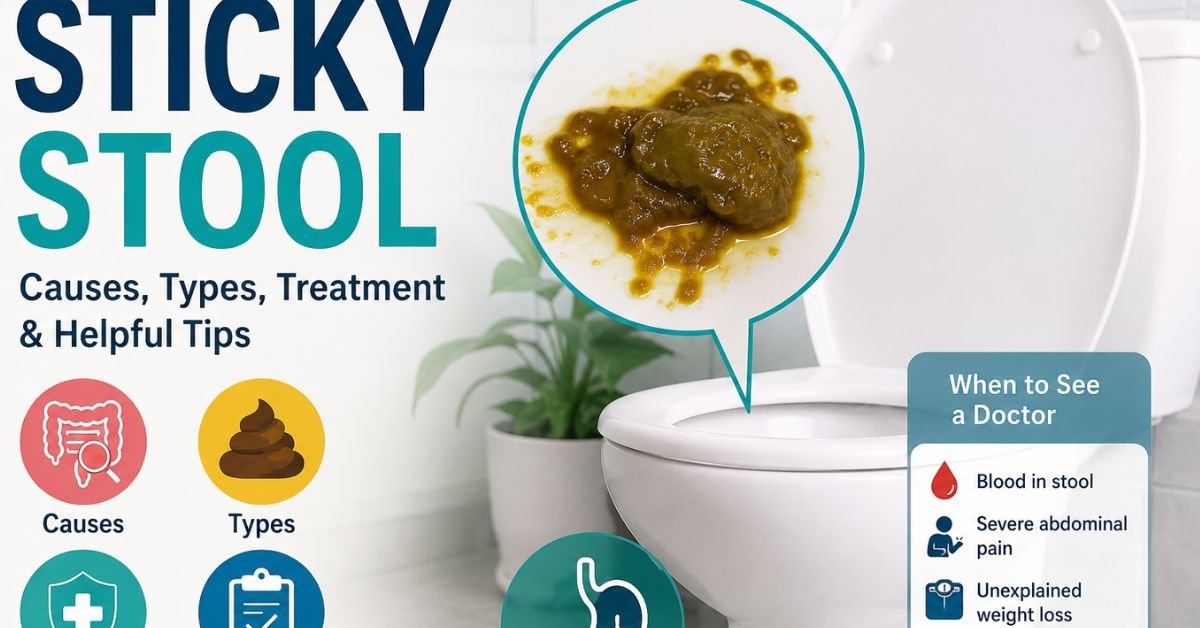
Sticky stool is a bowel movement that has a tacky, glue-like, greasy, or unusually soft consistency. It may cling to the toilet bowl, require more wiping than usual, or be difficult to flush. Some people may also notice mucus, an oily appearance, an unusual smell, or a change in stool color.
Occasional sticky stool is not necessarily a sign of a serious health problem. Stool consistency can naturally change from day to day depending on what you eat and how your digestive system is working. For example, eating a large amount of fatty food can temporarily make stool greasier because excess dietary fat may pass into the stool.
Sticky stool becomes more important when it happens repeatedly or appears together with other symptoms. Greasy, pale, floating, bulky, or very foul-smelling stool may indicate steatorrhea, which means there is too much fat in the stool. This can happen when the digestive system has difficulty breaking down or absorbing fats.
Benefits of Understanding Sticky Stool
There are no health benefits to having sticky stool itself. Instead, the benefit comes from understanding why your stool has changed. Paying attention to bowel movements can provide useful information about digestion, diet, and general gut health.
One important benefit is that you may identify dietary triggers. If sticky stool repeatedly appears after very rich or high-fat meals, keeping track of your food and symptoms may help you recognize a connection. Fried foods, fatty meats, whole-fat dairy products, and other high-fat foods can contribute to greasy stool in some people.
Understanding stool changes can also help you recognize symptoms that deserve medical attention. Persistent greasy stool, unexplained weight loss, abdominal discomfort, or signs of poor nutrient absorption should not simply be ignored. Fat malabsorption can interfere with the absorption of fat-soluble vitamins such as vitamins A, D, E, and K.
Another benefit is better communication with a healthcare professional. If you know when the stool changes started, how often it occurs, what it looks like, and whether other symptoms are present, you can provide useful information during a medical evaluation.
Types of Sticky Stool
Sticky stool can look different depending on its cause. Recognizing these differences does not provide a diagnosis, but it can help you understand what may be happening.
Greasy or Oily Sticky Stool
Greasy stool may have an oily appearance, float in the toilet, smell stronger than normal, or leave an oily film behind. This type can happen after eating a very fatty meal, but persistent greasy stool may be associated with problems digesting or absorbing fat.
Sticky Stool With Mucus
Mucus is a slippery substance naturally produced in the intestines. A small amount may be normal, but increased mucus can make stool appear slimy or sticky. Constipation, hemorrhoids, intestinal inflammation, infections, food intolerance, and conditions such as irritable bowel syndrome can sometimes be associated with increased mucus.
Pale or Yellow Sticky Stool
Sticky stool that is pale or yellow and greasy may sometimes be related to fat digestion or absorption problems. Conditions involving the pancreas, liver, gallbladder, bile ducts, or small intestine can affect how fats are processed. Persistent pale stool can also be associated with problems involving bile flow.
Black and Tarry Sticky Stool
Black, tar-like stool is different from ordinary sticky stool and can be a warning sign. Black and tarry stool, particularly when it has a strong unusual odor, can indicate bleeding in the upper digestive tract. Some medicines and supplements, including iron and bismuth-containing products, can also darken stool, so the cause is important to determine.
How to Manage Sticky Stool
There is no single treatment for sticky stool because the right approach depends on its cause. If the change is occasional and appears after eating a particularly rich meal, you can start by observing whether it improves when your normal eating pattern returns.
Drinking enough water is important for normal bowel function. Eating a balanced diet that includes appropriate amounts of fiber from foods such as vegetables, fruits, whole grains, and legumes may also support regular bowel movements. If you suddenly increase fiber, do so gradually and drink enough fluids because a rapid change can sometimes cause gas or bloating.
It may also help to reduce very fatty meals if you notice that they consistently make your stool greasy or sticky. However, you should not completely remove dietary fat without medical advice, especially if you already have a digestive condition or problems with nutrient absorption. People with confirmed fat-malabsorption conditions may actually need individualized dietary guidance.
If sticky stool continues despite reasonable diet and lifestyle changes, a healthcare professional can investigate the underlying cause. Depending on your symptoms, evaluation may involve medical history, physical examination, blood tests, stool tests, or other investigations.
Tips for Best Results
First, pay attention to how often sticky stool occurs. A single unusual bowel movement is generally less concerning than a persistent change that continues for days or weeks. Keeping a simple record of meals, stool appearance, bowel frequency, and other symptoms can make patterns easier to recognize.
Second, look at your overall diet rather than blaming one specific food immediately. Very fatty meals may temporarily cause greasy stool, but repeated symptoms can have other causes. A balanced eating pattern is generally more useful than making extreme dietary restrictions.
Third, maintain good hydration and include fiber-rich foods in your diet when appropriate. Regular physical activity may also support normal bowel habits. Lifestyle factors such as diet, water intake, exercise, and stress can influence bowel movements.
Finally, know when to seek medical help. Contact a healthcare professional if sticky stool persists for more than about a week, keeps returning, or occurs with other concerning symptoms. Black or tarry stool, severe abdominal pain, unexplained weight loss, significant diarrhea, or other signs of illness deserve prompt medical evaluation.
Conclusion
Sticky stool is a change in bowel consistency that can have many possible causes. Sometimes it is temporary and related to eating a high-fat meal, while other cases may involve excess mucus, food intolerance, constipation, or problems with fat digestion and absorption.
The most important factor is whether the change is occasional or persistent. Greasy, oily, pale, floating, or foul-smelling stool that happens regularly may require medical evaluation because it can sometimes be associated with fat malabsorption or digestive disorders.
A balanced diet, adequate hydration, appropriate fiber intake, and awareness of food triggers may help support healthy digestion. However, persistent sticky stool should not be self-diagnosed. If it continues or appears with warning signs such as black tarry stool, severe pain, or unexplained weight loss, speak with a healthcare professional for proper evaluation and treatment.